Almost 80 percent of Steam’s platform is a low-cost game.
Steam, the leading global PC game platform, has a relatively open top-up policy that attracts a number of independent creators, while a recent report by the game industry analysis team, HushCrasher, states that, since 2022, about 80 per cent of the games in Steam have had a development budget of less than $1 million, with the vast majority of the games falling within the industry’s low-cost development category.
According to a study published by HushCrasher on November 5, using machine learning models and multiple sources of information, there are approximately 100,000 games on the Steam platform, focusing on the period 2022 to 2025, with 19,634 games evaluated by at least 10 players.
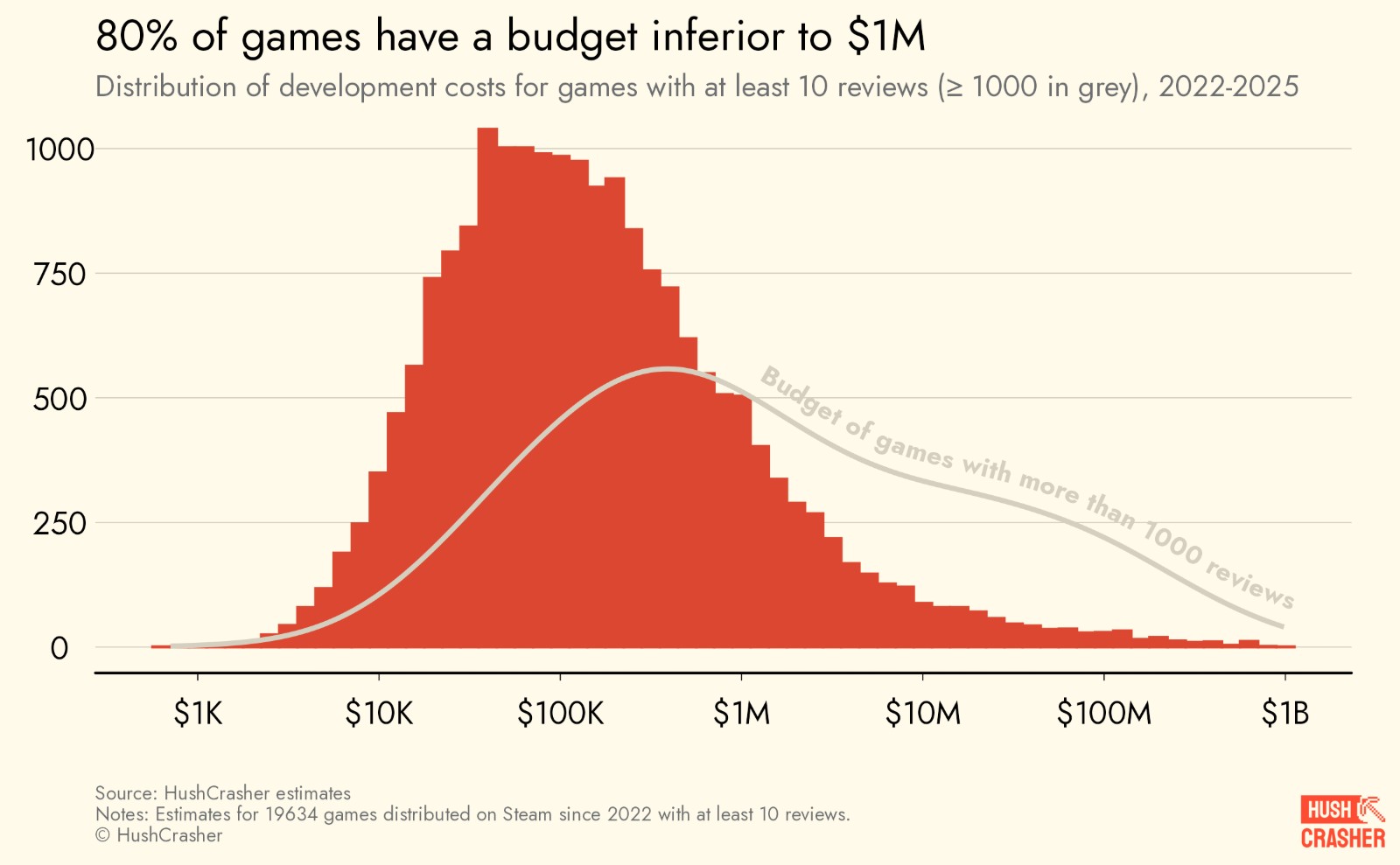
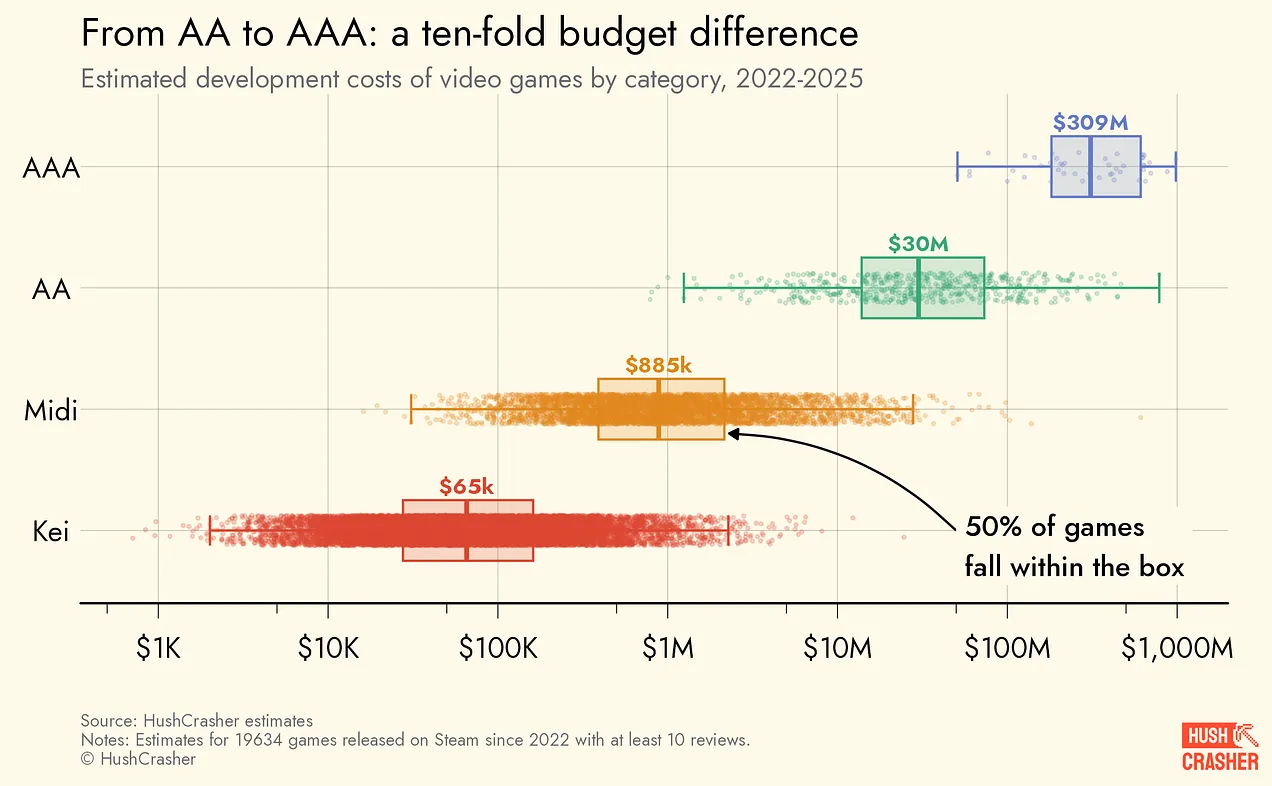
The results show that nearly 80 per cent of these works have not been developed at a cost of US$ million, and the most common budget area is around US$ 50,000.
HushCrasher, based on the size and staffing of the production, divides non-3A/2A works into two categories:
-
Kei games: developed by individuals or very few members with a budget of approximately $65,000. Most of the development costs come from fixed expenses such as development costs and rent.
-
Midi games: produced by small and medium-sized studios with a budget of approximately $0.9 million, about 14 times the Kei category.
And the 2A game, which usually involves hundreds of people with medium- and large-scale funding; 3A, which can have thousands of participants, has an exponential increase in development costs.
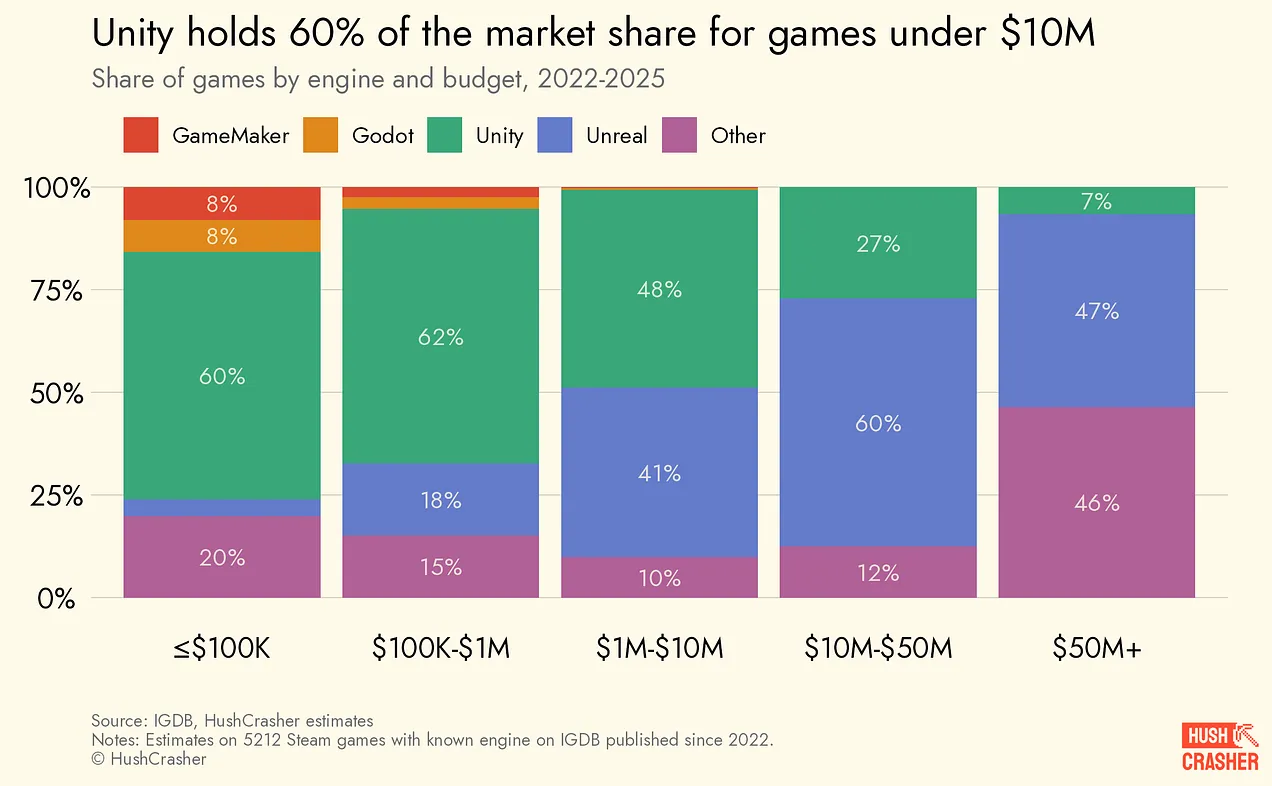
Technically, the HushCrasher analysis indicates that about 60% of Steam games are developed using the Unity engine.
But as the budget scale rises, there is a marked decline in the use of Unity, which accounts for about 6 out of a $1 million budget, and more than twice as much of a $10 million budget.
Of the ultra-low budget areas of less than $100,000, Godot and GameMaker have seen a significant increase in usage, and even about 20 per cent of their home-made and exclusive engines.
HushCrasher speculates that this phenomenon is linked to the 2023 Uniity ‘ s controversial fee policy, which led to a decline in the confidence of independent teams.
The report also notes that only 23 per cent of the total sample has the support of a distributor, with the rest being developed spontaneously (Self-Publicing). The proportion of self-issuance is particularly high for works with a budget of less than $100,000.
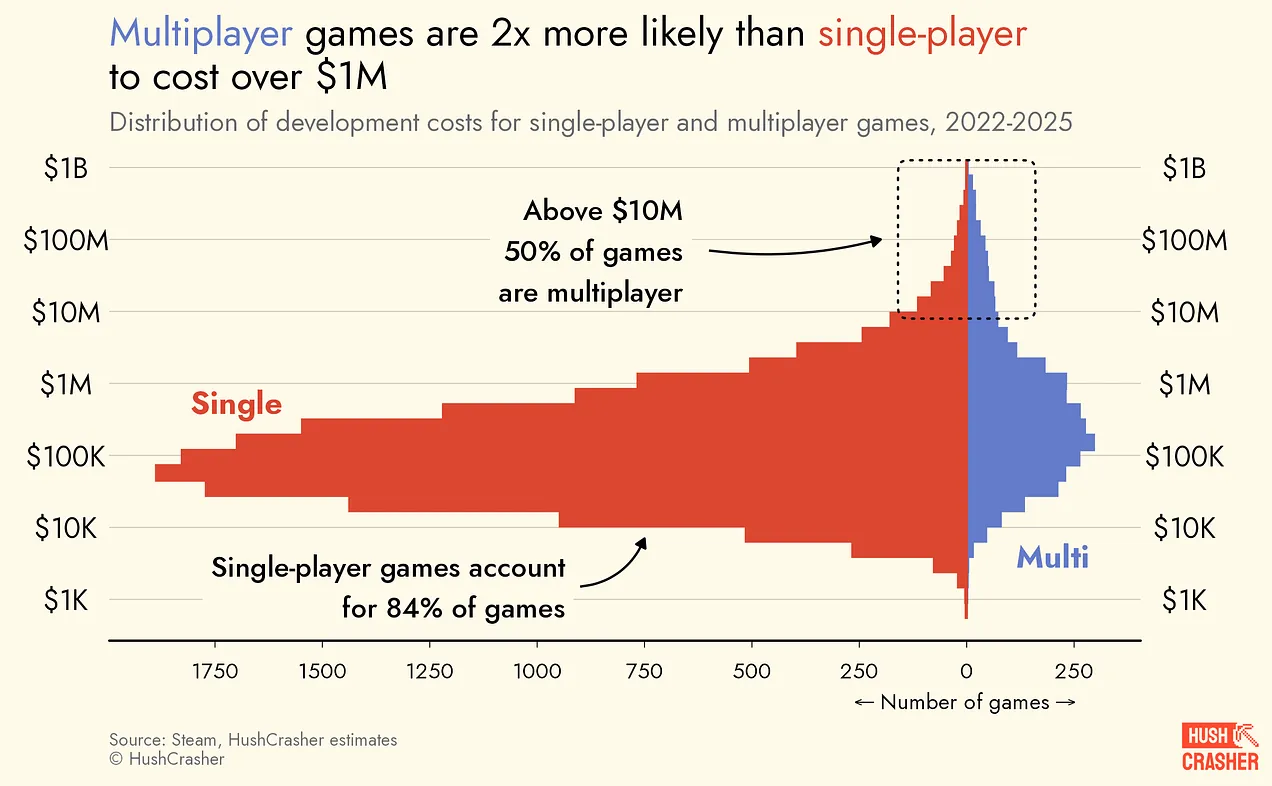
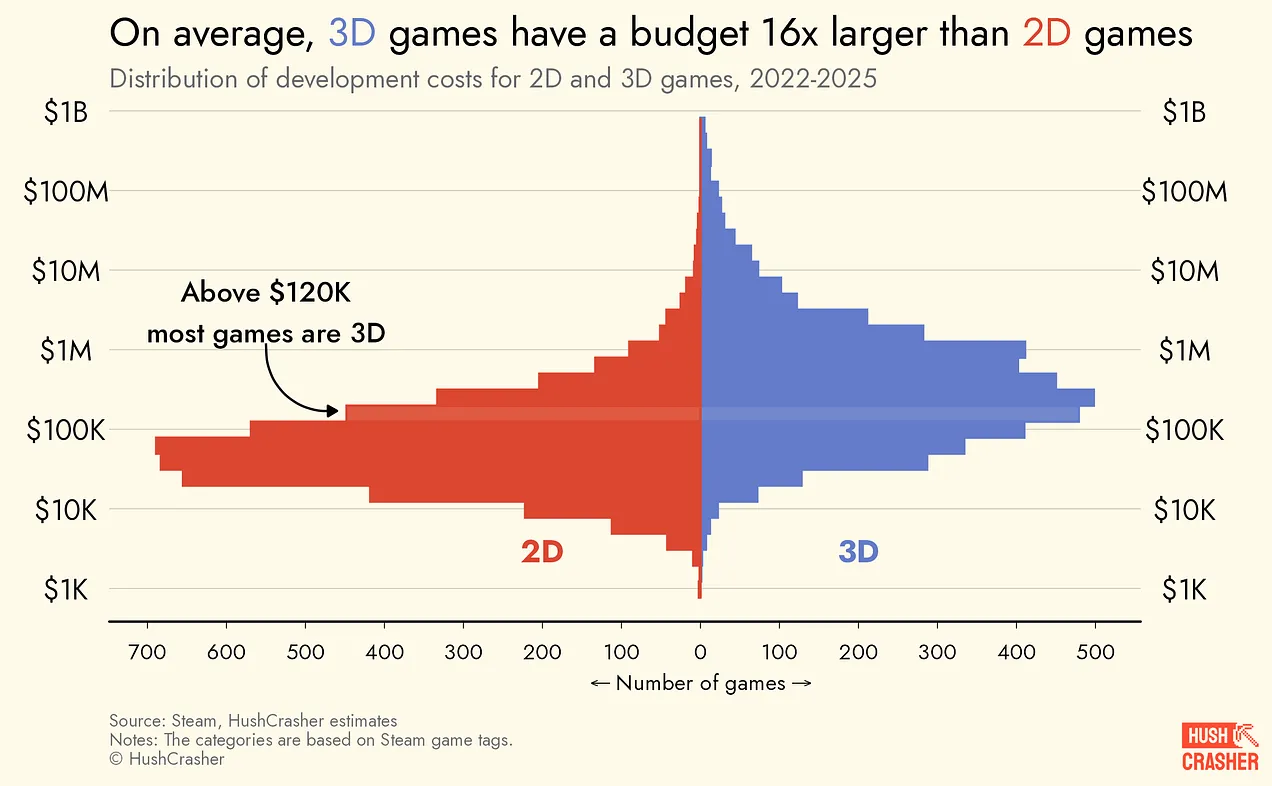
In addition, the survey shows that the average budget for 2D games is only 1/16 for 3D games, while only 16 per cent of Steam games launched between 2022 and 2025 are multi-operator-type, but the percentage rises to 50 per cent for works with a budget of over $10 million.
HushCrasher stressed that the error in its predictive model averaged only about 10 per cent. The analysis is based on dozens of variables, including the length of the list of developers, the curriculum vitae of the distributor and the studio, the type of job title and the number of supporting languages.
Although it is an extrapolative statistics, it is clear from the results that the Steam platform is dominated by small and medium-sized development teams.
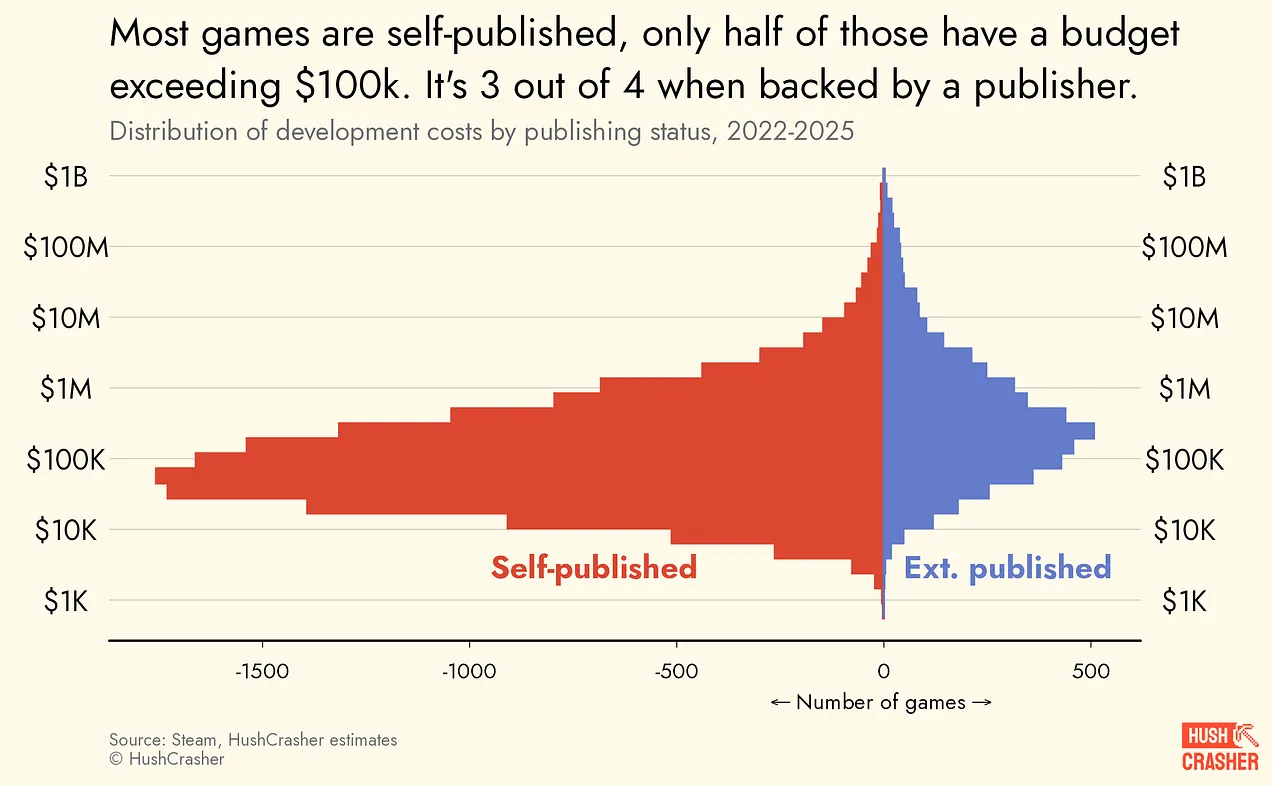
In addition, according to the industry survey published by the GDC (Game Developments Conference) in 2025, about 21 per cent of the world’s developers are individual producers, and the total figure, when added to small independent and free-flowing studios, is 40 per cent. This echoes the hushCrasher data, suggesting that the low-budget game is the core structure of the current Steam ecosystem.
Overall, the analysis highlights the trend towards polarization of game development costs, with a small number of large works being budgeted for in astronomical terms, while the vast majority of Steam games are developed by small teams or even by individuals.
At a time when the costs of marketing and development are rising, how to create differentiated content in a limited budget has become the most realistic issue for new generation game developers.

Related Posts
Forty-one percent of the players buy a host to play their own game.
The jury ruled that Meta and YouTube were guilty of social media addiction.